Quick Answer
Winters are starting earlier and producing more extreme cold events, driven by Arctic amplification from 45% sea ice loss since the 1990s (NSIDC). That's a problem for facilities relying on rock salt: rock salt becomes ineffective below 15°F (-9.4°C). Alternative chemicals work at lower temperatures but cost significantly more. The most cost-effective way to close the coverage gap is to supplement chemicals with heated floor mats at building entries, primary walkways, and stair treads, automatic coverage that isn't temperature-limited, runs 24/7, and protects against slip-and-fall liability regardless of what weather arrives.
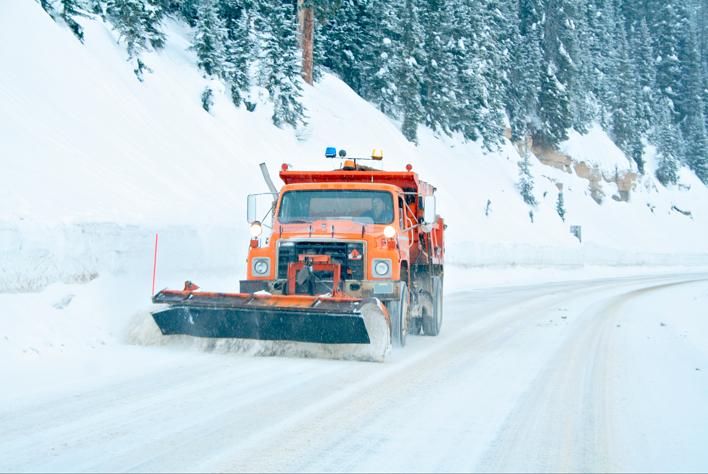
A last-minute storm can have facility crews scrambling to clear parking lots and walkways before they become hazardous. A significant multi-day snowfall can push even well-resourced facilities into reactive mode. But the real challenge isn't a single storm, it's a pattern that is making winters more extreme across much of the northern hemisphere, extending the season, and creating temperature conditions that expose the limits of conventional snow removal programs.
What's Covered
Why winters are getting more extreme
The intuitive assumption is that global warming means milder winters, but that's not the complete picture. In addition to overall warming in many regions, there has been a significant increase in extreme cold events, heavy snowfall, and longer winter seasons across much of the northern hemisphere. Climate researchers attribute this to Arctic amplification.
As the National Snow and Ice Data Center (NSIDC) documents, there is 45% less sea ice today than in the 1990s. When sea ice is lost, the darker water surface that is exposed absorbs far more solar heat than ice would, warming the water, which causes more ice to melt, which exposes more water. This self-reinforcing cycle (Arctic amplification) adds enormous amounts of moisture to the atmosphere, moisture that eventually falls as precipitation, including significantly heavier snowfall in regions that feed from Arctic air masses.
Additionally, the warming Arctic is disrupting the polar jet stream, the atmospheric boundary that historically kept Arctic air contained. As the jet stream weakens and undulates more, it pulls frigid Arctic air further south, delivering extreme cold events to regions that previously saw them rarely or not at all. The net effect: winters that start earlier, last longer, and include temperature extremes that facilities in those regions hadn't planned for.
What this means for your facility's snow plan
The shifting pattern has direct operational implications. Budget and schedule planning that was calibrated to historical winter norms, storm frequency, duration, and temperature range, may now be systematically underprepared. Facilities need to plan earlier in the season, budget for more events per season, and account for temperature ranges that extend below what their current chemical program handles effectively.
This doesn't mean every year will be catastrophically severe. But the probability of encountering a winter that exceeds your current plan's design parameters is higher than it was a decade ago. Snow removal programs built entirely around reactive, chemical-based approaches have structural vulnerabilities that conservative weather assumptions amplify.
Earlier Season Start Means Earlier Plan Activation
October snowfall and freeze events, once uncommon in many northern U.S. regions, are becoming more frequent. Facilities that don't activate their snow removal programs until November or December are increasingly exposed to early-season incidents that fall outside the operational window their plan was designed for.
The temperature limits of rock salt
Rock salt, sodium chloride, remains the workhorse of commercial snow and ice management. It's inexpensive, widely available, and effective across the temperature range that covers the majority of winter events. But it has a hard performance floor: below approximately 15°F (-9.4°C), rock salt becomes ineffective. It cannot lower the freezing point of water enough to cause melting, and applying it at these temperatures provides no meaningful ice control.
In an era when the jet stream is delivering Arctic air events further south and more frequently, this 15°F floor is a real operational constraint, not a theoretical one. Facilities that have never needed to address sub-15°F conditions may find their program inadequate during events that are now occurring with greater frequency.
Alternative de-icing chemicals address the temperature gap: calcium chloride is effective at sub-zero temperatures, and magnesium chloride performs well below 0°F (-18°C). But these alternatives cost significantly more per application than sodium chloride brine, making large-area application of premium chemicals costly for extended cold events.
Heated mats as a plan supplement
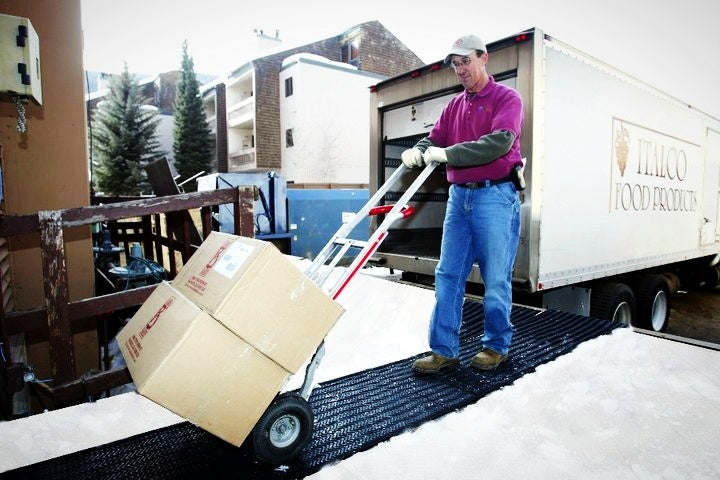
The most cost-effective way to address both the temperature limitation of chemicals and the coverage gap between storm onset and crew response is targeted deployment of heated floor mats at the highest-risk surfaces: building entries, primary walkways, and stair treads.
Heated mats are not temperature-limited. They function at -8°F (-22°C) and below, maintaining surface temperature regardless of what the ambient temperature is doing. They run 24/7 without crew intervention, there is without activation delay, reapplication schedule, or coverage gap during the transition period between when a storm begins and when a crew responds. For the surfaces where a slip-and-fall incident creates the greatest liability exposure, this continuous automatic coverage provides a risk reduction that no chemical or mechanical program can match.
The economics favor deployment at priority surfaces rather than large areas: for building entries, stair treads, and the primary pedestrian walkways, the surfaces with the highest foot traffic, a heated mat deployment cost far lower than a single slip-and-fall liability claim eliminates one of the most predictable sources of winter risk.
Auditing your snow removal plan
The right time to audit your snow removal plan is before winter, not after a coverage failure. Consider these questions as a starting framework:
Does your chemical program have coverage at temperatures below 15°F? If your region has experienced or is likely to experience sub-15°F events, you need either premium chemicals, heated surfaces, or both at critical locations.
How much time elapses between storm onset and your first crew response? That window is your highest-exposure period. Any surface that is unprotected during that window, particularly building entries and primary walkways, is a liability exposure point every storm.
Does your plan's season window match your current weather patterns? If you're seeing October and early November freeze events but your program doesn't activate until later, you have a seasonal gap that needs addressing.
Are your highest-risk surfaces actually your highest-priority surfaces? Building entries and stair treads consistently account for a disproportionate share of slip-and-fall incidents. If they're not receiving priority attention in your removal sequence, recalibrate.
Close the coverage gaps in your winter plan
HeatTrak industrial heated mats provide continuous automatic coverage at building entries, primary walkways, and stair treads, regardless of temperature, storm intensity, or crew availability. Add them to your existing plan before the next storm.
Request a Free Quote →Frequently Asked Questions
Is winter weather getting worse for commercial facility managers?
Research supports the trend. Arctic amplification from 45% sea ice loss (NSIDC data) is adding atmospheric moisture and disrupting the jet stream, contributing to heavier snowfall, earlier season starts, and more extreme cold events in the northern hemisphere. For facility managers, this means more winter events per season and temperature extremes that exceed conventional planning assumptions.
At what temperature does rock salt stop working?
Rock salt (sodium chloride) becomes ineffective below approximately 15°F (-9.4°C). Facilities experiencing temperatures below this threshold need alternative chemicals (calcium chloride, magnesium chloride) or temperature-independent solutions like heated mats at priority surfaces.
What are the limitations of a chemical-only snow removal plan?
Four limitations: temperature thresholds (rock salt fails below 15°F); coverage gaps between storm onset and crew response; reapplication requirements during long events; and pavement damage from sodium chloride. High-risk surfaces like building entries and stair treads benefit from supplemental heated mat coverage.
How do heated floor mats improve a commercial snow removal plan?
They provide continuous, temperature-independent, automatic surface clearance at priority locations. They function at -8°F and below, eliminate the storm-onset coverage gap, require no reapplication, and produce no chemical runoff. For building entries, stair treads, and primary walkways, they are the most reliable single addition to an existing reactive plan.
About HeatTrak
HeatTrak industrial heated mats complement commercial snow removal programs by maintaining automatically clear surfaces at the highest-risk locations, building entries, primary walkways, and stair treads, regardless of temperature or storm conditions. Request a free facility quote at heattrak.com/pages/request-a-quote-from-a-heattrak-pro.